HOMILY – 23rd Sunday in Ordinary Time, Year A
Ezekiel 33:7–9 • Romans 13:8–10 • Matthew 18:15–20
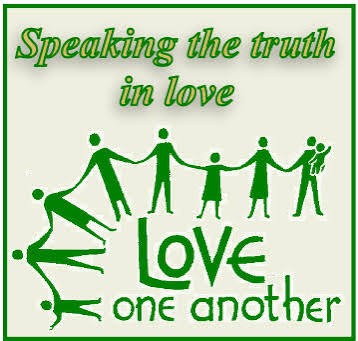
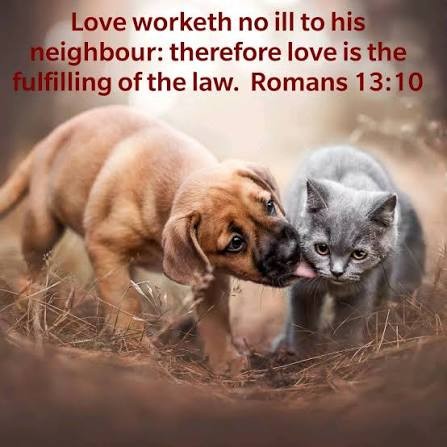
“True love does not simply leave people to their fate.
True love has the courage to help one another find the way home.”


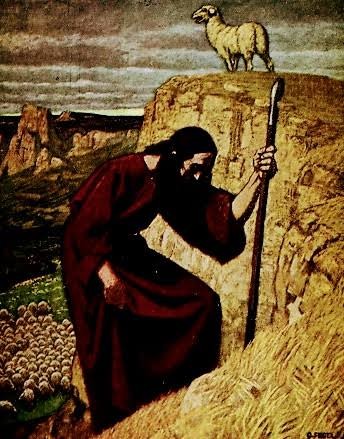
If I see my brother or sister walking toward a cliff, and I remain silent simply because I do not want trouble, perhaps that is not love.
Perhaps it is selfishness… dressed up as politeness.
So the message of today’s readings could be summed up in one simple sentence: Do not love one another with silence.
(Let me begin with a little story).
A man was driving along a winding mountain road.
Suddenly, a car came toward him from the opposite direction. As it passed, the driver rolled down his window and shouted at the top of his voice:
“BUFFALO!” The man immediately became furious. “What? How dare he insult me!” So he quickly rolled down his own window and shouted back:
“YOU’RE THE BUFFALO!” Feeling rather pleased with himself, he continued driving. But less than a hundred metres around the next bend… he slammed on the brakes. There, right in the middle of the road, was— a herd of buffalo! The other driver had not been insulting him at all. He had been trying to save his life.
Sometimes our problem is not that nobody warns us. Our problem is that we interpret every warning as an attack. And sometimes there is something even more tragic: the people who love us eventually become afraid to warn us.
Sometimes what sounds like an insult may actually be a warning.
And sometimes the words that hurt us most may be the very words that save our lives.
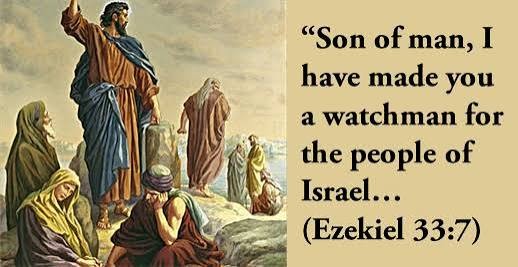
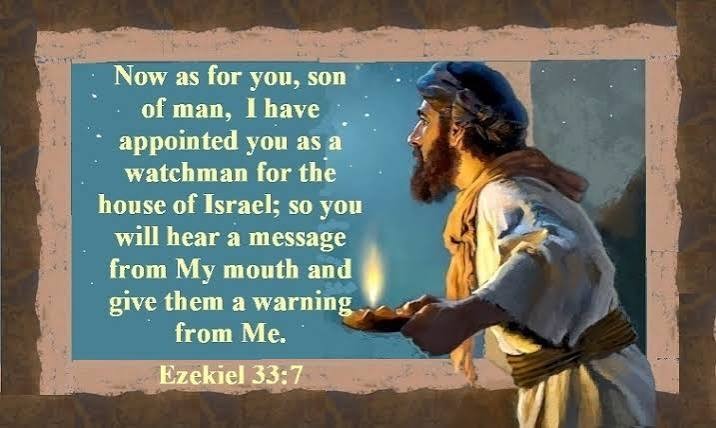
1. “I have appointed you a watchman” — Ezekiel 33:7–9
In the first reading, God says to Ezekiel:
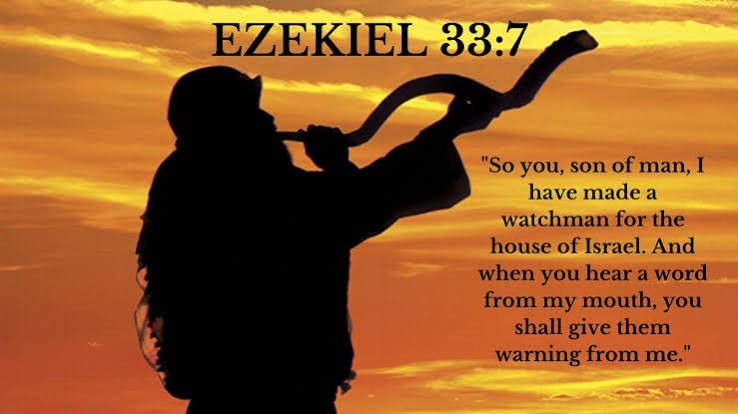
“I have appointed you as a watchman for the house of Israel.”
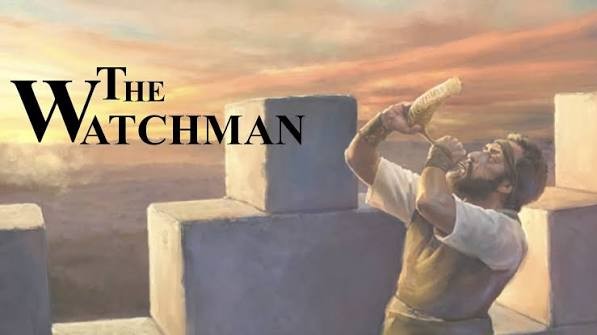
The word watchman is very important.
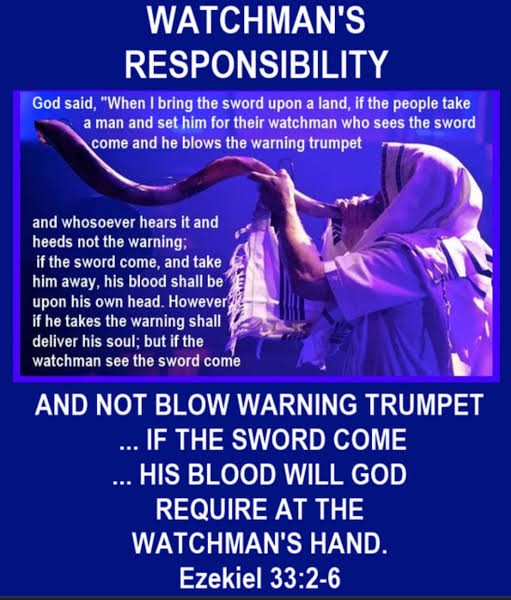
In ancient cities, a watchman stood high upon the city wall. From there, he could see things that the people below could not yet see.
If an enemy was approaching, his responsibility was not to say:
“Better not warn them. They might become worried.”
Or: “Better keep quiet. They may not like me.”
Or even: “It is their life. It is none of my business.”
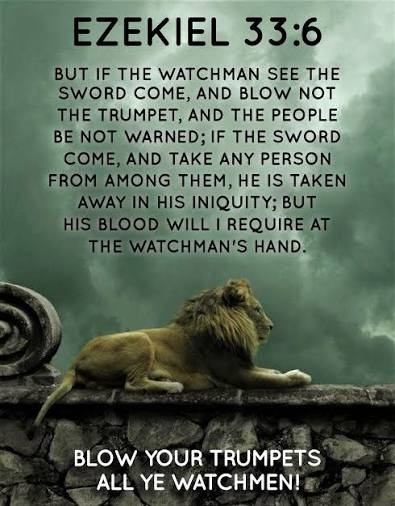
No, no! If the watchman saw danger and refused to sound the alarm, his silence could cost lives.
That is why God’s words to Ezekiel are so serious: if you see evil approaching and refuse to warn the people, God will hold you responsible.
And this challenges us today.
We live in a world where we often hear:
“It’s his life.” – “Mind your own business.” – “As long as I’m not doing anything wrong, that’s enough.”
But Scripture tells us: No. It is not enough.
-If we see our children going down a dangerous path, we have a responsibility to speak.
-If we see a friend destroying his family, we have a responsibility to help.
-If we see injustice, Christians have a responsibility to speak up.
-And if we see the weak being crushed, the Church has no right to remain silent.
But then comes the important question:
If we must speak, how should we speak?
2. Saint Paul gives us the answer: “Owe nothing to anyone, except to love one another” — Romans 13:8–10
The second reading is beautiful. Saint Paul tells us that there is one debt we can never finish paying: the debt of love.
All the commandments, he says, are summed up in these words:
“You shall love your neighbour as yourself.”
And this is the key to understanding today’s readings.
God has not appointed us to go around looking for other people’s faults.
He has not appointed us to be the morality police.
He has made us brothers and sisters.
So before correcting someone, perhaps we should ask ourselves:
“Am I saying this because I love this person… or because I want to win?” There is a huge difference.
-If I secretly enjoy seeing the other person humiliated, perhaps what I am doing is not love.
-If I use the truth to destroy someone’s reputation, that is not Christian correction.
Because— Truth without love can become a weapon.
But love without truth can become a lie.
A Christian must hold both together: Truth + Love.
3. Jesus shows us how to deal with conflict — Matthew 18:15–20
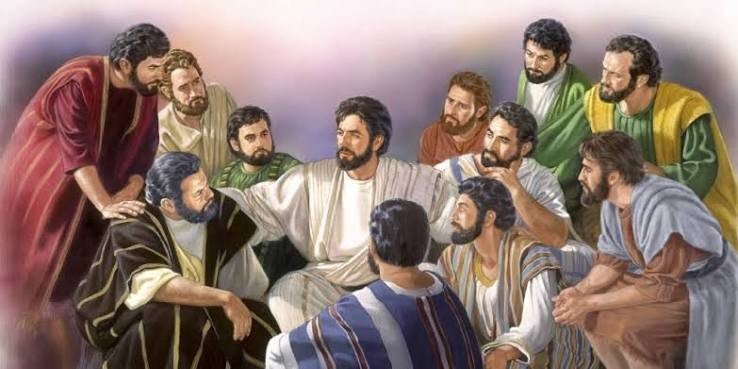
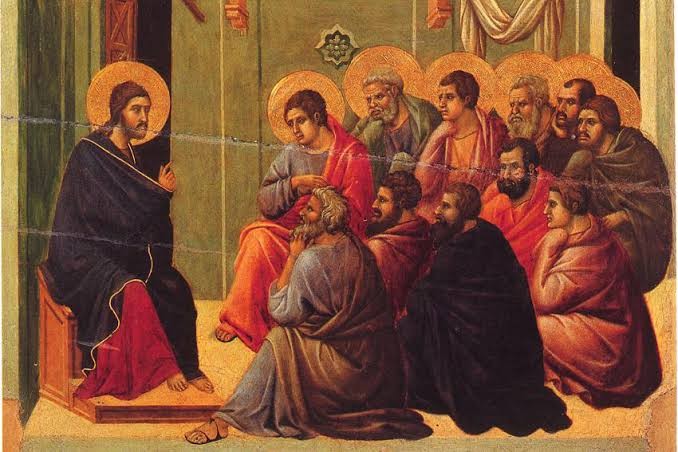
Today’s Gospel is remarkably practical.
If a brother or sister sins against us, what should we do?
Jesus does not say: “Post it online first!”
Jesus does not say: “Create a LINE group and tell everybody!”
And Jesus certainly does not say: “Tell ten other people first, and then make the person concerned the last one to hear about it!”
No! Jesus says: “Go and tell him his fault between you and him alone.”
How different this is from the world we live in!
Sometimes today, the last person to discover that we have a problem with him is the person himself.
We tell our friends. We tell our relatives. We tell our LINE group.
Sometimes we even tell Facebook. But we never tell the person himself.
Jesus gives us what we might call “the staircase of reconciliation.”
First: speak to the person privately. If that does not work:
Second: bring one or two trustworthy people to help. And if that still does not work:
Third: let the community help.
Notice something very important.
The goal is never: “How can I make the guilty person lose?”
Jesus says: “If he listens to you, you have won back your brother.”
You have won back your brother. That is the heart of the Gospel.
The mission of the Church is not to produce winners and losers.
It is to help people who have been divided become brothers and sisters again.
4. Our world desperately needs this today
We live in the age with perhaps the greatest technology for communication in human history.
And yet, strangely enough, we may be communicating less and less.
We can send a message halfway around the world in a fraction of a second, yet sometimes members of the same family sit at the same dinner table and do not speak to one another.
Politics divides people.
Wars teach human beings to see the other side only as enemies.
Social media allows us to judge people we have never even met—in a matter of seconds.
Our world does not suffer from a shortage of opinions.
It suffers from a shortage of conversations born from love.
And this is part of the mission of the Church.
The Church should not be a place where perfect people gather.
It should be a place where imperfect people learn how to forgive one another.
A parish without conflict probably does not exist.
But a parish where people sometimes disagree, sometimes hurt one another, and yet continue to love, continue to speak, continue to forgive, and continue to walk together—
that is the face of the Church our world needs to see.
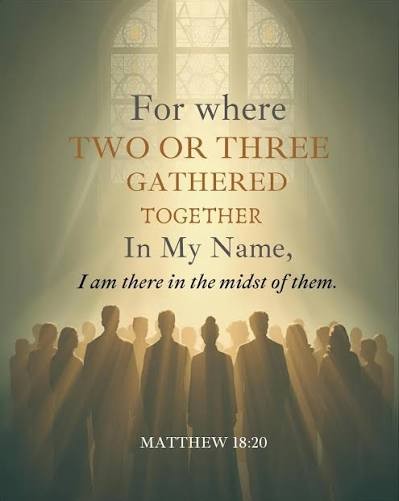
5. “Where two or three are gathered in my name…”
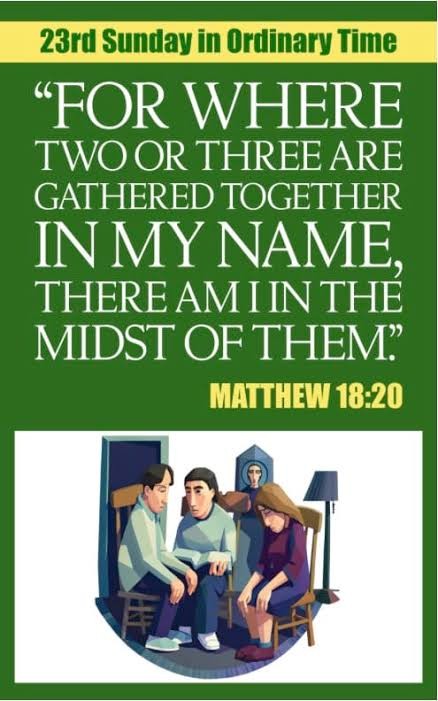
And today’s Gospel ends with one of the most beautiful sayings of Jesus:
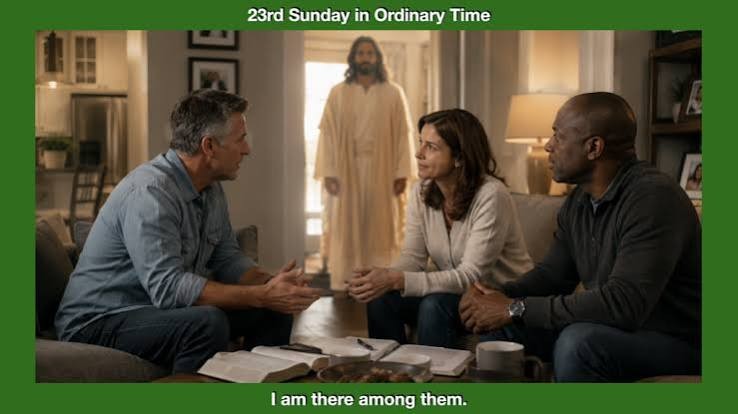
“Where two or three are gathered together in my name, there am I in the midst of them.”
We often use these words when speaking about prayer.
And rightly so. But look carefully at the context.
Jesus has been speaking about conflict, correction, reconciliation, and winning back a brother or sister.
Suddenly these familiar words become much deeper.
Jesus is not present only in a beautiful church.
Sometimes He is present at the dinner table at home, when a father and son who have not spoken for months finally sit down and talk.
Jesus is there in a small room when a husband finally finds the courage to say: “I am sorry.”
Jesus is there when two friends who have hurt each other stop asking:
“Who was wrong?” and begin asking: “How can we love each other again?”
That, too, is holy ground.
And so, what is God asking of us today?
Perhaps after Mass today, God is not asking us to do anything extraordinary. Perhaps He is asking for only—
one phone call,
one message,
one apology,
one act of forgiveness,
or one conversation we have postponed for far too long.
And before we leave this church today, I would like to leave you with just one question: Is there someone God is waiting for me to “go and speak to” … instead of continuing to “speak about”?
Because sometimes… Love does not mean remaining silent.
And correction is not condemnation—if our purpose is to bring someone home, not to defeat them.
And remember the man on the mountain road?
Sometimes the person shouting a warning at us is not our enemy at all.
Perhaps that person simply sees something we cannot yet see.
So the next time somebody warns us, perhaps we should not immediately shout back: “YOU’RE THE BUFFALO!”
Because there really might be… a herd of buffalo around the next corner!
And perhaps— the voice we least want to hear
may be the very voice God is using to save our life. Amen.
Have a blessed Sunday.
Msgr. Andrew Vissanu Thanya-anan
Parish priest, St. John Catholic Church
Ladprao, Bangkok
ช่องทางติดตามข้อคิดบทเทศน์ประจำวัน
ID Line : @vissanu201
https://lin.ee/6gZZDwO
รูปภาพ