Homily and Reflection
for the Solemnity of Saints Peter and Paul
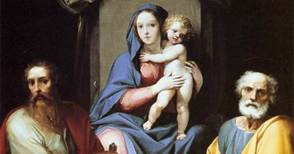
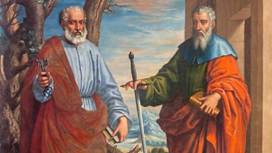
Theme: “The Rock and the Missionary: The Church Becomes Strong Through Weakness Transformed by God’s Grace”
“Different pillars, but one heart.”
1. The Keeper of the Keys of Heaven
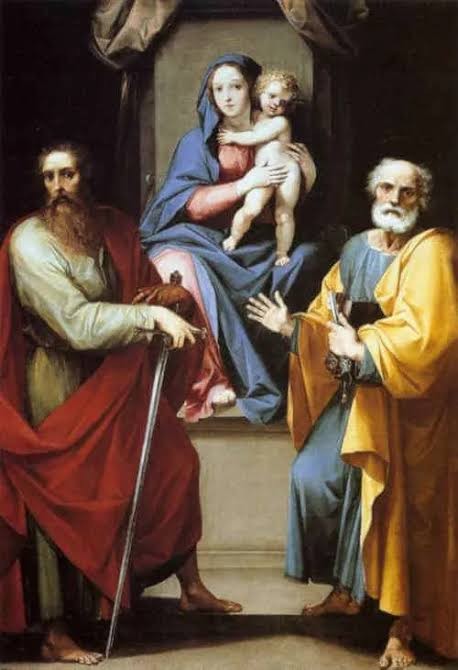
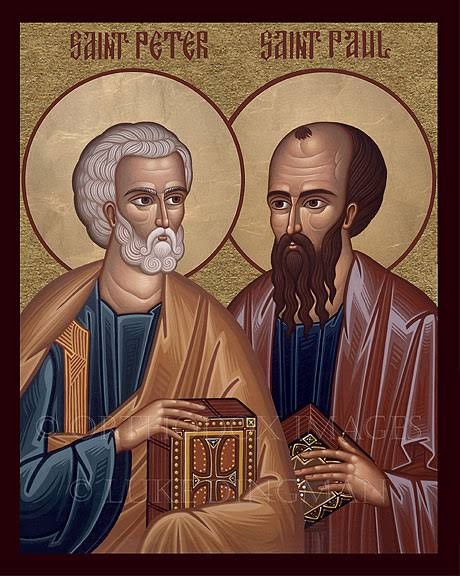
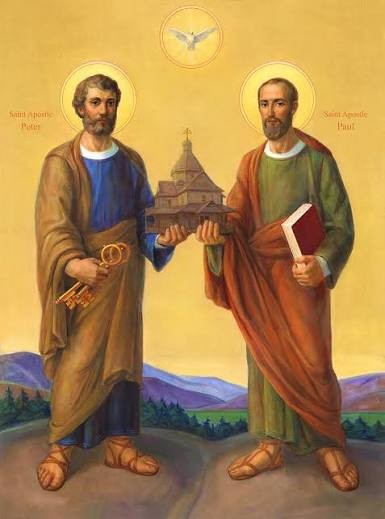
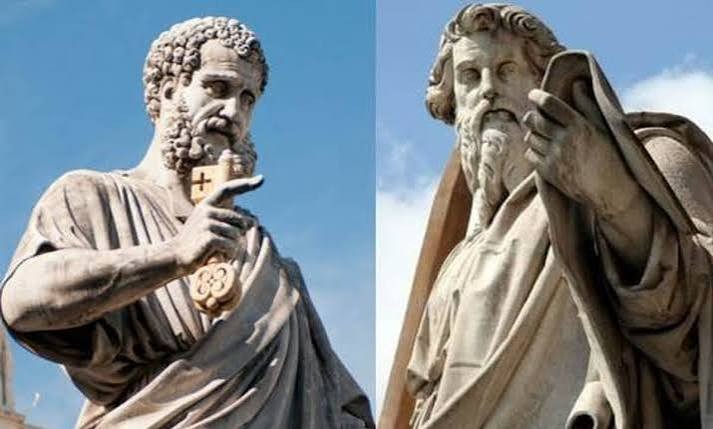
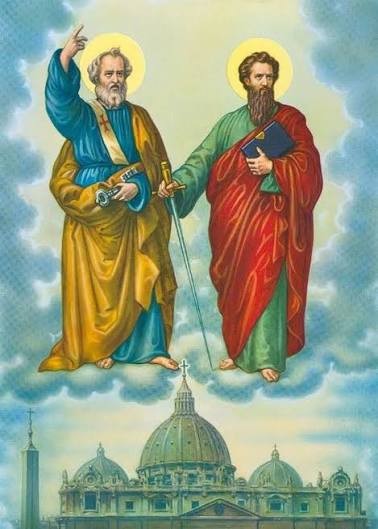
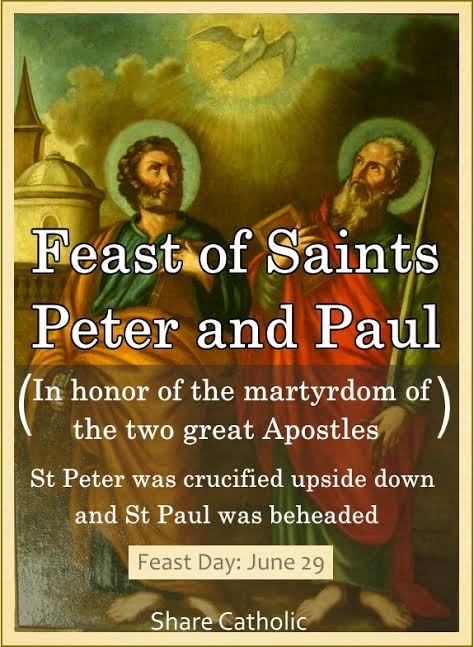
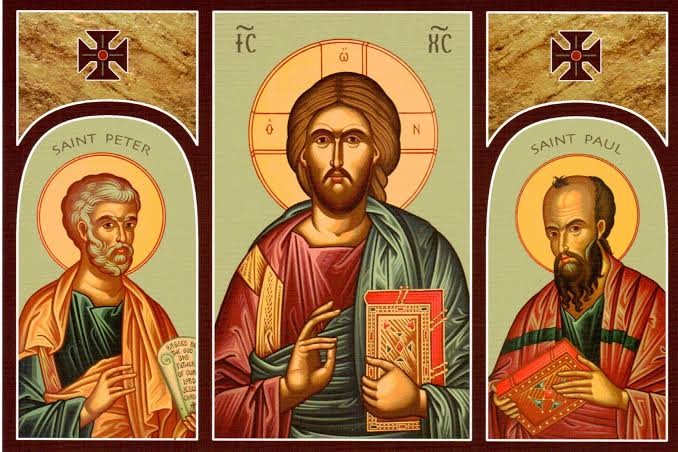
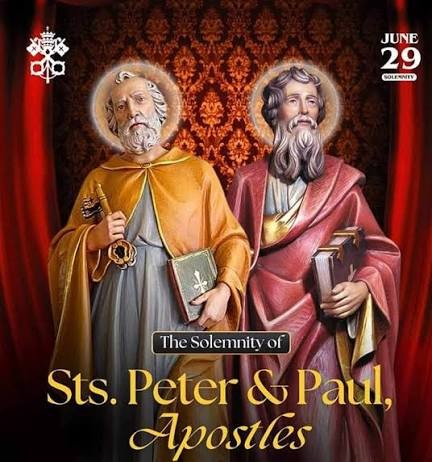
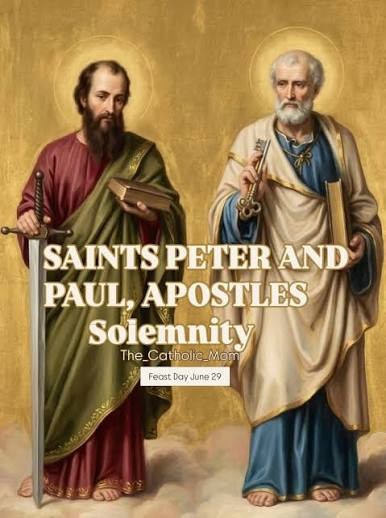
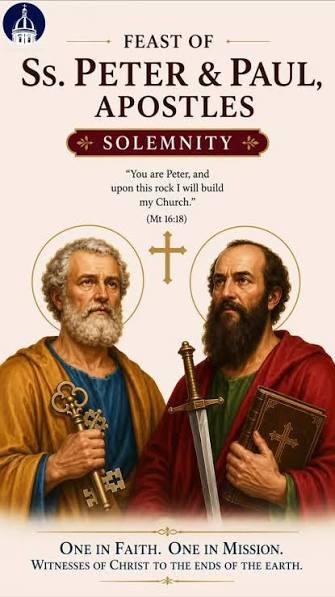
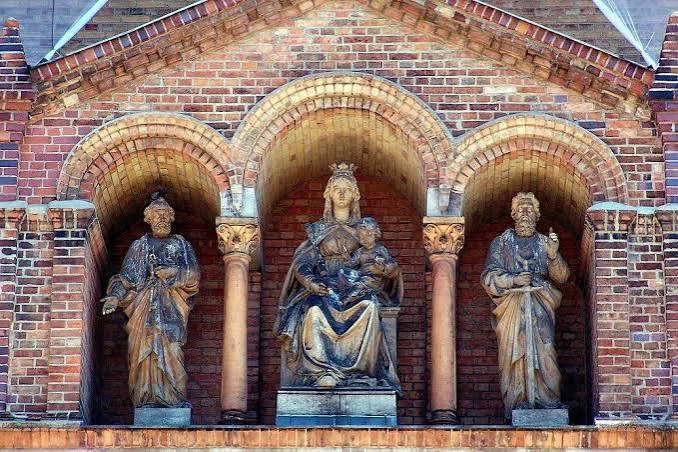
Today we celebrate the great solemnity of two mighty apostles: Saint Peter and Saint Paul.
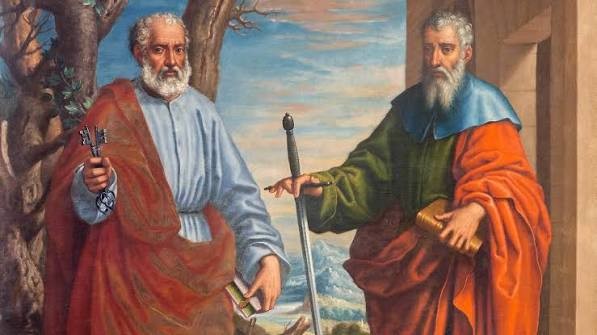
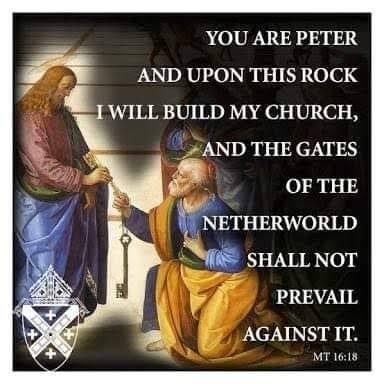
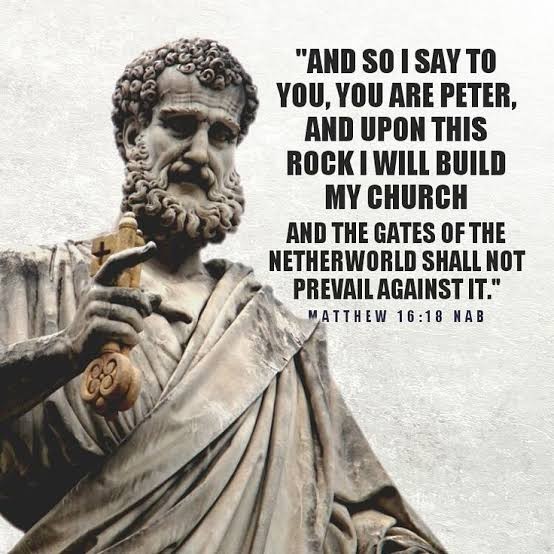
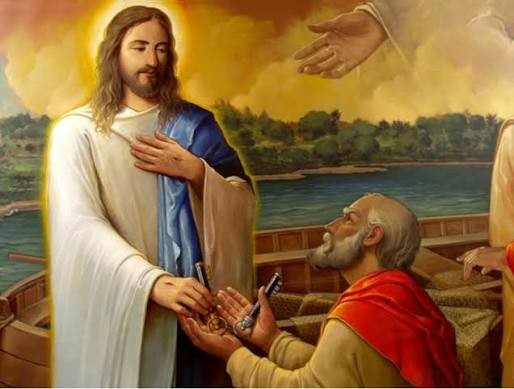
Whenever we think of Saint Peter, we often picture him as the one holding the keys of heaven, standing at the gates and deciding who may enter. And so the story goes…
One day, Jesus came to inspect the gates of heaven. To His surprise, He found many souls wandering happily inside heaven—souls whose records, to put it mildly, were not exactly spotless.
So Jesus went straight to Saint Peter and asked:
“Peter! Why have you let all these people in? Aren’t you the one guarding the gate and holding the keys?”
Saint Peter looked nervous, scratched his head, and whispered:
“Oh Lord… please don’t scold me too harshly. Every time I lock the main gate and refuse entry to sinners, Your Mother, Mary, quietly opens a back window of heaven, lowers her rosary, and pulls them in! How could I possibly stop Your Mother?”
This is a humorous story, of course, but hidden within it is a beautiful truth. Heaven—and the Church—are not places reserved for perfect people. They are places for sinners who have received mercy.
And Saint Peter often seems to be the one carrying the pressure of that mercy.
2. The True Identity of the Two Apostles: A Powerful Contrast
When we look at the personalities of Saint Peter and Saint Paul, we see two men who could hardly be more different.
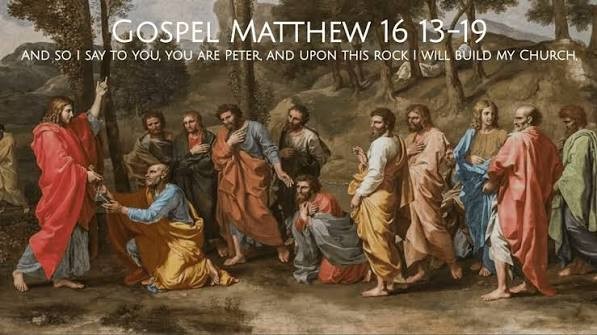
Saint Peter was an ordinary fisherman. He was impulsive, outspoken, sometimes fearful, and he denied Jesus three times. Yet the Lord chose him to be the Rock and the first Pope.
Saint Paul was a brilliant scholar, highly educated, strict in the Law, once a persecutor of Christians, even involved in hunting them down. Yet he was converted and became the great apostle who carried the Gospel to the nations.
Why would God choose people like this?
Why not choose someone with a clean record, a perfect past, and a flawless life?
Because God wanted to show us that the Church is not carried forward merely by human talent, intelligence, or strength. The Church is carried forward by the grace of God.
The Church and the World Today: Lessons from Saints Peter and Paul
Today we live in a world marked by division, rapid technological change, and social media that is often quick to judge, condemn, and “cancel” anyone who makes a mistake.
In such a world, both the Church and every Christian face enormous challenges.
The lives of Saints Peter and Paul offer us two timeless lessons.
1. Unity in Diversity
The Church today is journeying together through the process of Synodality—walking together as the People of God.
This is not something entirely new.
Even Peter and Paul sometimes disagreed with one another. They debated important issues, such as circumcision and the observance of Jewish customs for Gentile converts.
Their discussions were honest and sometimes intense.
Yet they never allowed disagreement to become division.
Why?
Because Jesus Christ remained at the center of their lives.
Their unity was never based on having identical opinions; it was based on sharing the same Lord.
This is a lesson our world desperately needs today.
Within our parishes, our families, and even within the Church herself, we encounter differences of opinion, different spiritualities, different cultures, and different generations.
There may be misunderstandings between young and old.
There may be different visions for the future.
There may even be disagreements about the best way to serve the Church.
But differences should never become excuses for hatred or rejection.
Saints Peter and Paul remind us that we may differ in our methods, but we must remain united in Christ’s love.
Our diversity is not a weakness.
When rooted in Jesus Christ, it becomes one of the Church’s greatest strengths.
2. God Always Gives a Second Chance
Another lesson shines brightly from today’s feast.
Modern society often has very little patience for failure.
A single mistake can permanently damage a person’s reputation.
People are publicly criticized, rejected, or “cancelled.”
Many are judged forever by the worst moment of their lives.
But God is different.
Look at the two greatest leaders of the early Church.
Peter denied Jesus three times.
Paul persecuted the followers of Christ.
By human standards, neither man would have been considered qualified for leadership.
Yet God saw beyond their failures.
He saw hearts capable of repentance.
He saw men who would allow His grace to transform them.
That is why Peter became the Rock.
That is why Paul became the Apostle to the Nations.
Their greatness did not come from never falling.
Their greatness came from allowing God to raise them up again.
Perhaps today some of us feel discouraged.
Perhaps we feel burdened by sin.
Perhaps we believe we are not worthy.
Perhaps we are exhausted by the struggles of family life, work, ministry, or personal suffering.
If that is how you feel, then look again at Peter and Paul.
God does not call those who are already perfect.
He perfects those whom He calls.
All He asks is that we open our hearts and allow Him to transform our lives.
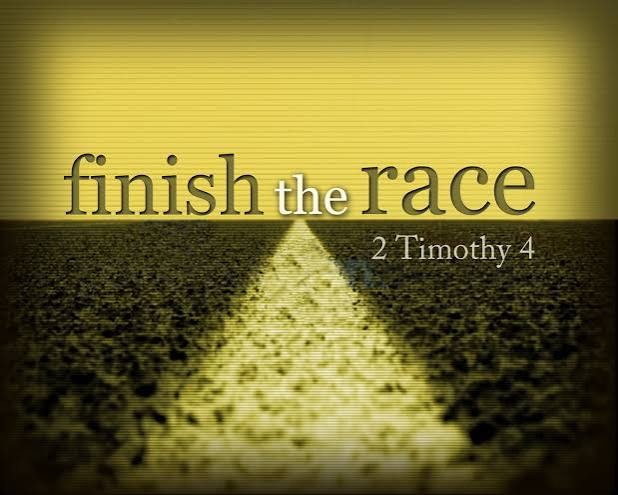
3. Running the Race to the Finish
Near the end of his life, Saint Paul could proclaim with confidence:
“I have fought the good fight, I have finished the race, I have kept the faith.”
(2 Timothy 4:7)
These are not the words of a man who had an easy life.
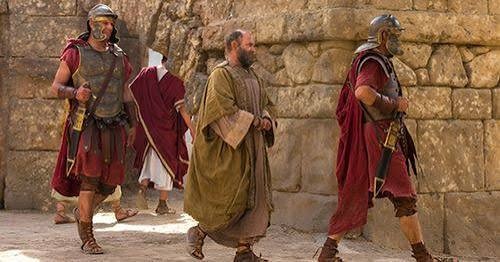
They are the testimony of someone who endured imprisonment, rejection, suffering, persecution, and countless hardships for the sake of Christ.
Saint Peter also bore witness with his very life.
According to ancient Christian tradition, he chose to be crucified upside down because he did not consider himself worthy to die in exactly the same manner as his Lord.
Both apostles reached the finish line.
Not because life was easy—
but because their love for Christ was stronger than every trial.
A Question for Each of Us
Today Jesus asks each one of us the very same question He once asked Peter:
“Do you love Me more than these?”
That question echoes through every generation.
Not:
“Are you successful?”
Not:
“Are you intelligent?”
Not:
“Have you ever failed?”
But simply:
“Do you love Me?”
If our answer is “Yes, Lord,” then He can do extraordinary things through ordinary people.
Conclusion
May the steadfast faith of Saint Peter become the solid rock upon which our families are built.
May the missionary zeal of Saint Paul set our hearts on fire with love for the Gospel.
And may each of us have the courage to become both a rock of faith for those around us and a joyful messenger of the Good News to a world that is desperately longing for hope, mercy, and the love of Christ.
Amen.
(Additional story for you)
The Inspector from Heaven
Allow me to share another story.
Like the first one, it is only a story—but one that carries a profound spiritual truth.
One day, Saint Peter was sitting at the Gate of Heaven, carefully reviewing the Book of Life. He looked exhausted. There had been an unusually large number of souls arriving that day, and he had barely had a moment to catch his breath.
Just then, Jesus approached, accompanied by a distinguished-looking gentleman. He appeared highly educated, impeccably dressed, and carried himself with the confidence of someone accustomed to authority.
Jesus smiled and said to Peter,
“Peter, while he was on earth, this man was an outstanding lawyer and an accomplished scholar. He wrote many respected theological books and often offered detailed critiques of the Church and even of the Apostles themselves.
Now that he has arrived in heaven, I would like him to conduct an audit of your admissions process. Let him examine your procedures and see whether your system has any weaknesses.”
Peter swallowed hard.
He knew very well that he had a reputation for being… perhaps a little too generous.
Nevertheless, he respectfully obeyed.
For the next three days, the lawyer carefully inspected every record, reviewed every regulation, and scrutinized every admission with meticulous attention.
Finally, he returned to Peter carrying a thick report.
With great seriousness he announced,
“Saint Peter, your administration is deeply flawed!
You have admitted thieves, notorious sinners, and even people who repented only moments before death.
I have documented every irregularity in this report.
I intend to present it to the highest authority in heaven and recommend a complete reform of the admission system.
Furthermore, I believe your authority to hold the Keys of Heaven should be revoked.”
Peter’s face turned pale.
Very nervously he asked,
“May I ask… to whom exactly are you planning to submit this report?
To the Father? Or perhaps to the Holy Spirit?”
The lawyer straightened his shoulders confidently.
“Neither. I shall present it to Saint Paul.
After all, Saint Paul wrote so clearly about righteousness, discipline, and sound doctrine.
Surely he will agree with me.”
At that very moment, a gentle laugh could be heard from behind the gate.
The lawyer turned around.
There stood Saint Paul.
With a broad smile, Paul walked over, threw an affectionate arm around Peter’s shoulder, and said,
“Ah… thank you very much for your report.
But I’m afraid you’re a little late.
You see, all those books and regulations I wrote while I was still on earth…
Once I arrived here and beheld the immeasurable mercy of God…
I was the one who told Peter to burn them long ago!”
Then, turning to Peter with a grin, he added,
“Come, Peter.
Let’s leave the paperwork behind and go find something to drink together.”
The Lesson Behind the Laughter
That story may make us smile, but it also invites us to examine our own hearts.
How often do we judge others primarily by rules, regulations, and outward appearances?
How often do we expect perfection from others while quietly excusing our own weaknesses?
The lawyer assumed that Saint Paul—the great theologian and defender of sound doctrine—would naturally stand on the side of strict justice.
But he misunderstood Paul completely.
Both Peter and Paul had already experienced the painful collapse of their own self-confidence.
Peter was certain he would never betray Jesus.
Yet before dawn, he denied his Lord three times.
Paul was convinced that persecuting Christians was an act of faithfulness to God.
Yet on the road to Damascus, he was humbled, struck blind, and transformed forever by the risen Christ.
Neither Apostle became a pillar of the Church because he had never failed.
They became pillars because they discovered something infinitely greater than their failures:
the boundless mercy of God.
That mercy changed everything.
It transformed fear into courage.
It transformed pride into humility.
It transformed persecutors into missionaries.
It transformed sinners into saints.
A Challenge for the Church Today
Perhaps this is one of the greatest lessons for the Church in our own time.
Our communities must certainly cherish truth.
They must uphold sound teaching.
They must respect discipline.
But none of these can ever be separated from charity.
Rules without love become burdens.
Truth without mercy becomes cruelty.
Justice without compassion becomes oppression.
Jesus Himself never lowered the standard of holiness.
But neither did He ever refuse His mercy to those who came to Him with humble and repentant hearts.
The Church is called to do the same.
Like Peter and Paul, we are called not merely to defend the faith, but to reveal the merciful face of Christ.
Whenever people encounter the Church, they should discover not a courtroom of condemnation, but a home where truth and mercy embrace one another.
As the Psalmist beautifully proclaims:
“Mercy and truth have met together; righteousness and peace have kissed each other.” (Psalm 85:10)
May our parishes, our families, and our own hearts become places where that beautiful meeting of truth and mercy is made visible to the world.
From Weakness to Witness
My dear brothers and sisters,
When the Church celebrates Saints Peter and Paul together, she is telling us something extraordinary.
She is not celebrating two flawless heroes.
She is celebrating two sinners who allowed God to transform them into saints.
Peter teaches us that failure is never the end.
Paul teaches us that conversion is never impossible.
Peter reminds us that Christ can build His Church even upon fragile human beings.
Paul reminds us that God’s grace can redirect even the most misguided life into an extraordinary mission.
Together they proclaim one message:
No one is beyond the reach of God’s mercy.
That is the hope of the Gospel.
That is the hope of the Church.
And that is our hope.
The Church Still Needs Both Peter and Paul
Our world still needs “Peters.”
Men and women who stand like a rock when truth is under attack.
People whose faith remains steady amid confusion.
Parents who faithfully hand on the faith to their children.
Priests who shepherd God’s people with humility and courage.
Young people who are not ashamed to say,
“I belong to Jesus Christ.”
But the world also needs “Pauls.”
Christians who are not afraid to leave their comfort zones.
Missionaries who bring hope into places darkened by despair.
Teachers who speak the truth with wisdom.
Believers who carry the Gospel not only across oceans but across the street—to their neighbours, colleagues, classmates, and friends.
The Church does not flourish by choosing between Peter and Paul.
She flourishes when she embraces both:
Peter’s steadfast faith and Paul’s missionary fire.
A Question That Echoes Through Every Generation
Before Peter became the shepherd of Christ’s flock,
Jesus asked him only one question.
Not,
“Peter, are you strong enough?”
Not,
“Peter, will you ever fail again?”
Not,
“Peter, are you worthy?”
He asked simply,
“Simon, son of John, do you love Me?”
(John 21:15)
That same question reaches each one of us today.
Not only priests.
Not only religious.
Not only bishops.
Every baptized Christian.
The future of the Church will not depend primarily upon better buildings…
or better technology…
or larger budgets…
or greater influence.
It will depend upon hearts that truly love Christ.
Because when someone genuinely loves Christ,
faith becomes courage,
service becomes joy,
and sacrifice becomes a privilege.
A Final Invitation
So today, let Peter teach us never to despair after we have fallen.
Let Paul teach us never to stop allowing God to change us.
Let Mary, Mother of the Church, continue quietly opening the windows of heaven for sinners who trust in her Son’s mercy.
And may we never become Christians who merely count other people’s sins.
Instead,
may we become disciples who reveal the limitless mercy of God.
Conclusion
My dear friends,
The Church has never been built upon perfect people.
She has always been built upon forgiven people.
The greatest saints were not those who never stumbled.
They were those who always rose again through the grace of Christ.
May the steadfast faith of Saint Peter become the foundation of our lives.
May the burning zeal of Saint Paul set our hearts ablaze with love for the Gospel.
And may every one of us become both a rock that strengthens others,
And a joyful messenger who proclaims Christ to the world.
Then, one day, when our earthly pilgrimage is over,
may we hear those beautiful words spoken by our Lord:
“Well done, good and faithful servant…
Enter into the joy of your Master.”
(Matthew 25:23)
And together with Saints Peter and Paul,
may we rejoice forever in the Kingdom of Heaven.
Amen.
Mercy is greater than human weakness.
Pope Leo XIV says:
God never chooses people because they are extraordinary.
He makes ordinary people extraordinary through His mercy.
Pope Francis Said:
The Church does not stand because Peter was strong.
The Church stands because Jesus Christ is faithful.
I wish you a happy Sunday.
Msgr. Andrew Vissanu Thanya-anan, Parish Priest of Saint John, Bangkok
ช่องทางติดตามข้อคิดบทเทศน์ประจำวัน
ID Line : @vissanu201
https://lin.ee/6gZZDwO
รูปภาพ