Homily for World Mission Sunday
Twenty Ninth Sunday in Ordinary Time Year A
18th October 2026 Centenary of World Mission Sunday
Isaiah 45:1, 4–6 | 1 Thessalonians 1:1–5b | Matthew 22:15–21
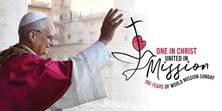
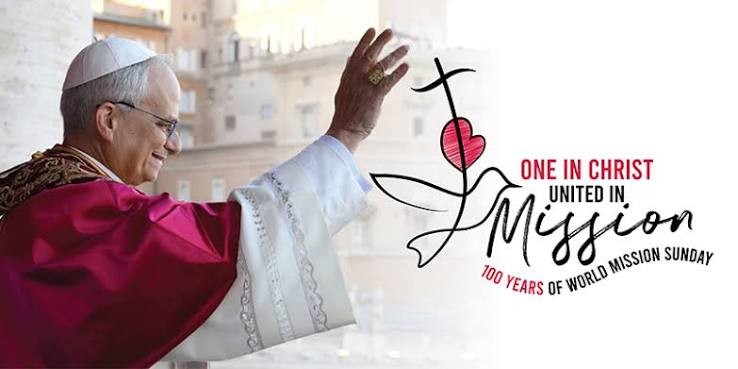
One in Christ United in Mission
About two hundred years ago, in Lyon, a young woman named Pauline Marie Jaricot heard that missionaries in Asia lacked basic support. She was neither a religious sister nor a missionary, yet her heart was on fire. She formed groups of ten ordinary workers; each prayed and gave one small coin weekly. Ten became thousands, and this simple idea grew into the Society for the Propagation of the Faith.
Pauline never crossed an ocean, but she helped send missionaries across the world. Mission does not always begin with feet that travel far. It begins with a heart that allows the love of Jesus Christ to catch fire.
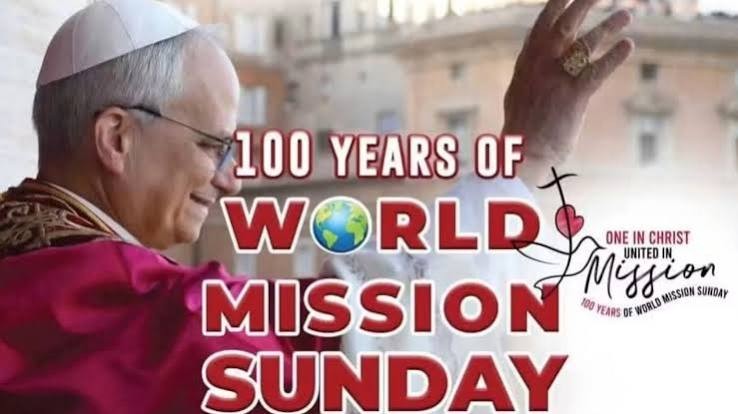
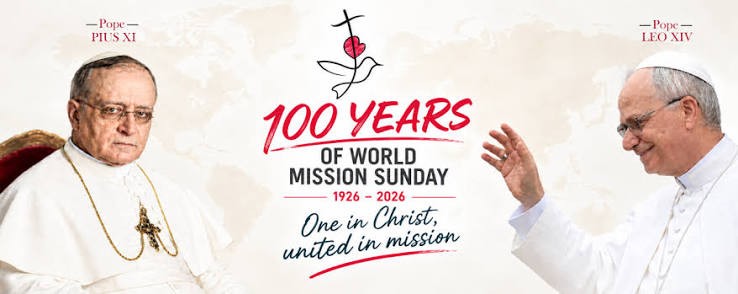
In 1926, Pope Pius XI established “World Mission Sunday” so that every parish would pray and share in the Church’s mission. As we mark its centenary, Pope Leo XIV gives us a beautiful theme: “One in Christ, united in mission.” Today’s readings show us what that mission looks like.
First, God can work through people who do not yet know him. God calls Cyrus, the Persian king, “my anointed,” although Cyrus was not an Israelite. God used this foreign ruler to free the Jewish people from exile and open their way home.
God does not work only through people on “our side.” He can work through another religion, another culture, someone who never comes to church, or even someone we find difficult. God is greater than every label we create. A missionary Church does not begin by condemning the world. It looks for the footprints of God already present in every human heart. We do not bring God where he is absent; we discover that he has arrived before us.
Second, the Gospel must become visible in our lives. Saint Paul praises the Thessalonians for their “work of faith, labour of love, and endurance in hope.” He does not speak only of faith, love, and hope as beautiful ideas. He speaks of work, labour, and endurance. Faith that never becomes action is only an opinion. Love that refuses to make sacrifices is only a feeling. Hope that cannot wait is only a dream.
The world is not short of religious messages. The internet is full of sermons and quotations. What the world needs are people in whom the Gospel can be seen and touched. Sometimes we post Scripture on our phone, while the people in our own home are afraid to speak to us because we are always in a bad mood. In that case, the phone may be a better missionary than its owner!
So we should ask: When people come close to me, do they meet the kindness of Jesus? Do the poor and those who have failed find a place beside me? The most convincing proclamation is a life that makes Christ believable.
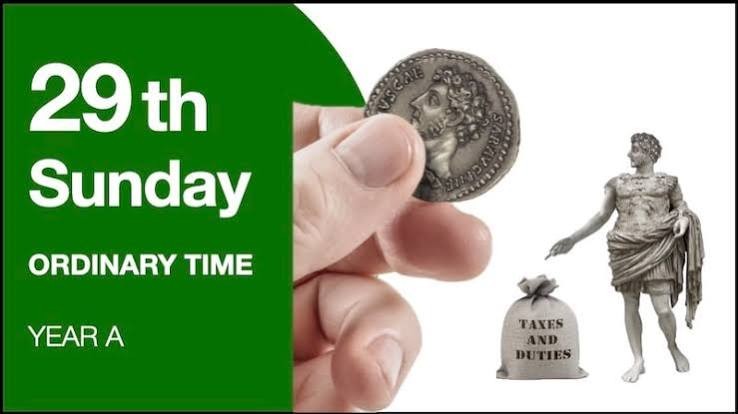
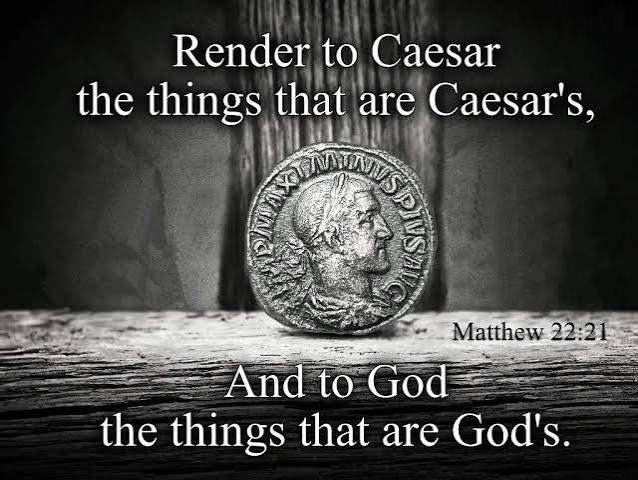
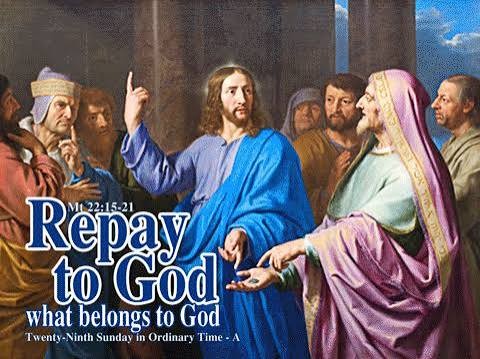
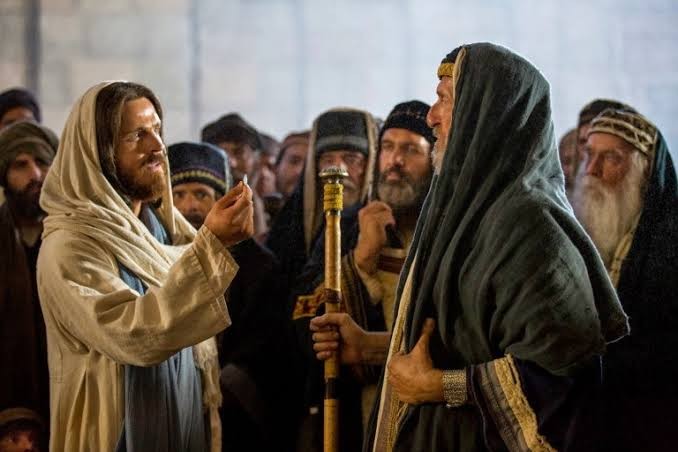
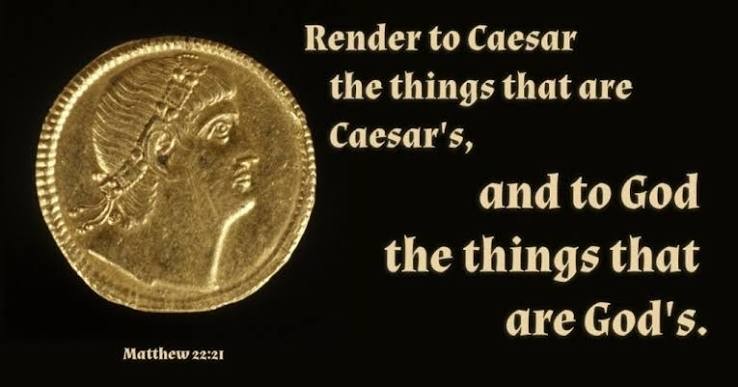
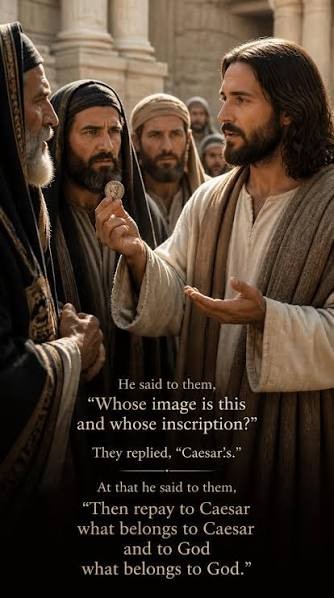
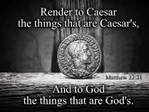
Third, the coin bears Caesar’s image, but every person bears the image of God. The Pharisees try to trap Jesus with a question about taxes. If he says, “Pay,” he may look like a supporter of Rome; if he says, “Do not pay,” he can be accused of rebellion. Jesus asks for a coin: “Whose image and inscription are these?” They answer, “Caesar’s.” Jesus replies, “Give to Caesar what belongs to Caesar, and to God what belongs to God.”
The coin bears Caesar’s image, so it can be returned to Caesar. But what bears God’s image? Every human being. Money may belong to Caesar, but our heart, conscience, dignity, gifts, wounds, and whole life belong to God. Our mission offering is good and necessary, but God wants not only the coin in our hand. He wants the person holding it.
No baptized person is excused from mission. Yet unity does not mean sameness. As different instruments serve one melody, our different gifts must serve one centre—Jesus Christ—and one mission: to make his love present in the world.
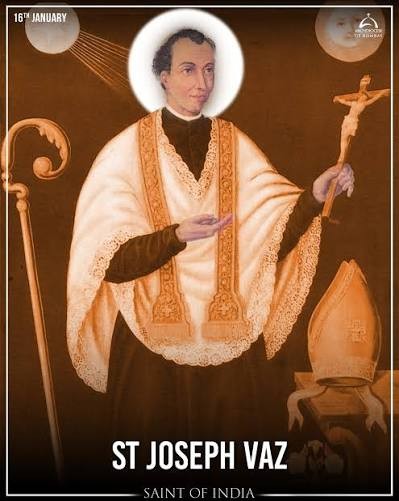
Saint Joseph Vaz shows us how this can be lived in a multi-religious society. More than three hundred years ago, Catholic priests were forbidden to enter Ceylon, now Sri Lanka. This Indian priest entered dressed as a beggar and walked barefoot from village to village. By night he celebrated Mass and cared for scattered Catholics. During a terrible smallpox epidemic in Kandy, many fled—but Joseph stayed. He brought food and water, cleaned wounds, buried the dead, and served everyone. He did not ask, “Are you Catholic?” but simply, “Are you suffering? Then I will stay with you.”
The king saw that this foreign priest remained when others ran away and gave him greater freedom to serve. A door that preaching could not open, it was opened by love. Joseph Vaz proclaimed Christ not by attacking another faith, but through humble service without discrimination. This speaks deeply to Thailand and Asian cultures: mission is not forcing Jesus Christ upon people; it is allowing them to meet Jesus Christ through the way we love them.
Some proclaim the Gospel abroad; others teach, care for the sick, raise children in faith, forgive an enemy, or give a small offering that becomes medicine or education. Never say, “What I can do is too small.” Pauline Jaricot’s little coins, joined to prayer and love, became a worldwide missionary movement.
Today Jesus looks at us and says: “The coin bears Caesar’s image, but you bear mine.” Give money to the one to whom it is due—but give your heart, your time, your gifts, your wounds, and your whole life to the God whose image is stamped upon you.
May our parish be more than a place where people gather on Sunday. May it be a community sent out on Monday. And when the world looks at us, may it see not only people who speak about Christ, but people who are truly one in Christ and united in his mission of love. Amen.
I wish each of you having a beautiful Sunday, the Day of the Lord
Msgr. Andrew Vissanu Thanya-anan
Parish Priest, St John Church, Ladprao, Bangkok
ช่องทางติดตามข้อคิดบทเทศน์ประจำวัน
ID Line : @vissanu201
https://lin.ee/6gZZDwO
รูปภาพ