Homily and Reflection for Sunday 27 September 2026
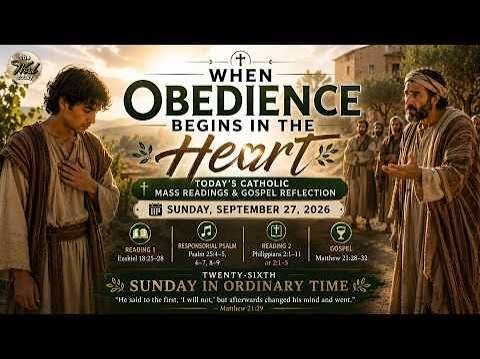
Twenty Sixth Sunday in Ordinary Time Year A
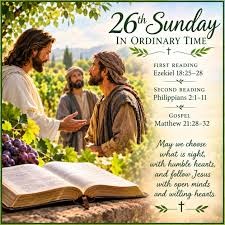
Ezekiel 18:25–28 · Philippians 2:1–11 · Matthew 21:28–32
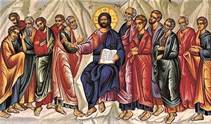
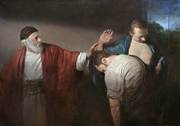
“God does not ask how we began; he asks which way we are walking now.”
After Mass one Sunday, a parish priest announced, “This Saturday, I need ten volunteers to help clean the church.” The first man immediately replied in a loud voice, “Certainly, Father! I will definitely be here. You can count on me!” Another man complained, “It is my day off, and you are still asking me to work, Father? I am not free!” Saturday morning arrived. The man who had promised, “I will definitely be there,” had switched off his phone, ignored every message, and was nowhere to be found. But the man who had complained that he was not free was the first to arrive, carrying a broom, a bucket, and a bag of coffee. The priest asked him, “Didn’t you say you were not free?” He answered, “My mouth was not free, Father, because it was too busy complaining—but my hands and feet were still free!”
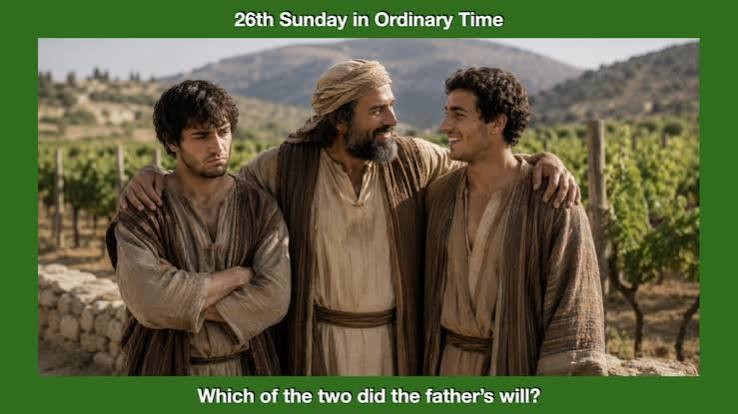
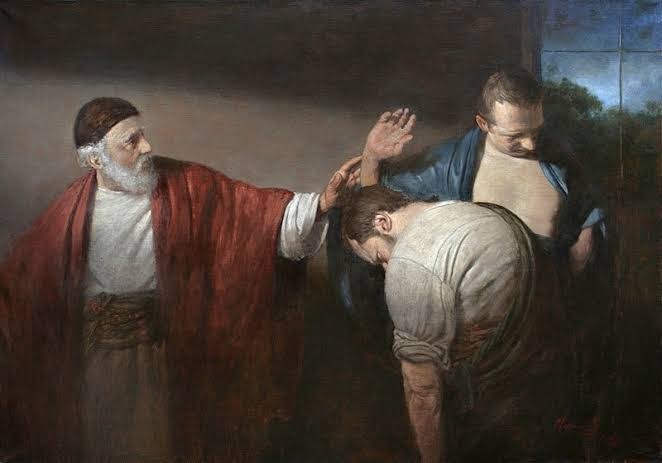
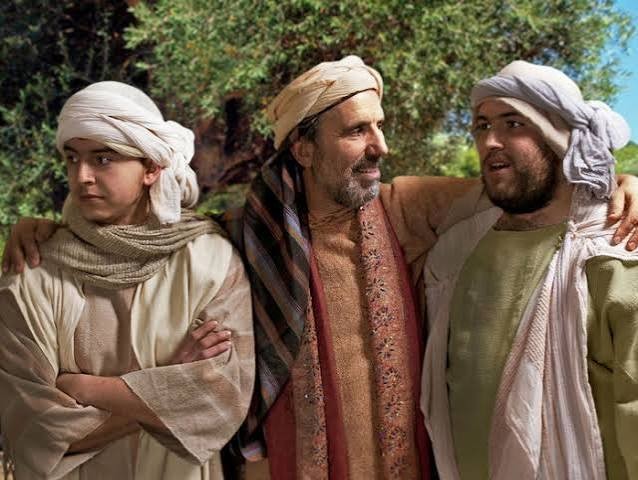
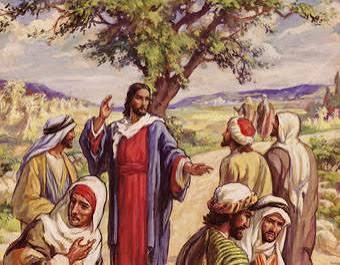
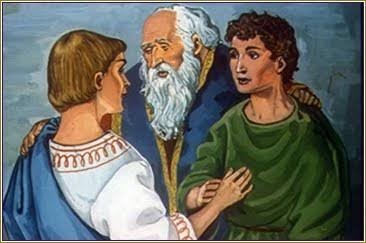
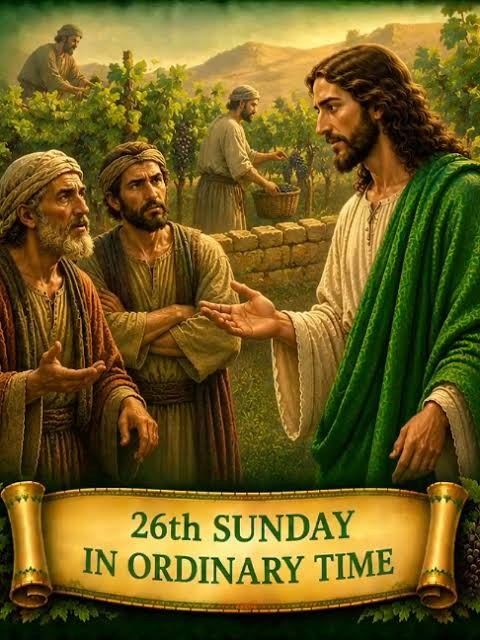
In today’s Gospel, Jesus tells us about two sons whose father asks them to work in his vineyard. The first says, “I will not,” but later changes his mind and goes. The second answers politely, “Yes, sir,” but does not go.
Then Jesus asks, “Which of the two did his father’s will?”
The answer is perfectly clear: not the one who spoke most beautifully, but the one who acted.
1 God looks at our direction not merely our past
The prophet Ezekiel tells us that if the wicked turn away from their evil, do what is right, and act justly, they shall live and not die.
This is today’s great good news: God does not imprison us in our past. He does not say, “You were wrong once, so you must always be wrong”; “You failed before, so you can never change”; or “Your family was like that, so you must be the same.”
God does not judge our life by an old photograph. He looks at the direction in which we are walking today. Someone who was far from God yesterday but turns toward him today is already walking on the road to life. By contrast, someone who was once close to God, once served the Church, and once enjoyed people’s trust, but has now become proud, cold, and unwilling to do good, may be walking in the wrong direction.
So let us not say, “I have been Catholic since birth,” as though a baptismal certificate were a ticket through heaven’s gate. We must ask ourselves:
Do I still have the heart of a disciple of Jesus today?
Whom have I forgiven today? How honest, compassionate, and just am I today?
2 “Yes Lord” can become our most polite lie
The second son addresses his father respectfully: “Yes, sir.” But his words have no feet, no hands, and no action. This is a real danger for us Christians. We may sing beautifully, pray at length, kneel reverently, and say “Lord, Lord” every Sunday. But if we leave the church and continue to cheat, gossip, exploit our employees, despise the poor, or refuse to make peace within our families, our “Amen” may be nothing more than the second son’s empty “Yes, sir.”
Jesus then speaks words that must have shaken the religious leaders of his time: “Tax collectors and prostitutes are entering the kingdom of God before you.”
He is not saying that sin does not matter. He is showing us that sinners who are willing to repent are closer to God than religious people who believe they no longer need to change.
Tax collectors and prostitutes had begun by saying “no” to God. Yet when they heard John the Baptist, they repented. The religious leaders said “yes” with their lips, but their hearts remained closed. The most dangerous sin, therefore, may not be having lost our way; it may be losing our way while remaining convinced that we are on the right path.
3 Jesus did not merely say “yes” he emptied himself
In the second reading, Saint Paul gives us the answer. Jesus Christ was in the form of God, yet he did not regard equality with God as something to be grasped. He emptied himself, took the form of a servant, and humbled himself even to death on a cross.
This is a true “yes.” The “yes” of Jesus has not only a voice, but wounds; not only a promise, but a cross; not merely good feelings, but the gift of his life.
Our world is full of declarations. We speak of peace while continuing to manufacture hatred. We speak of human dignity while leaving the poor behind. We speak of truth while forwarding stories we have never checked. We claim that technology will bring people together, yet sometimes use it to divide them.
Recently, Pope Leo XIV reminded us that artificial intelligence must serve human dignity and strengthen the bonds of the human family, rather than fuel division and conflict.
Our tools may become more advanced, but the Gospel’s question remains unchanged: Do we use them to love, or to wound? Do we press “Amen” beneath a message about love, only to press “Share” on a rumour that destroys another person’s reputation?
4 The Church must be the son who goes into the vineyard
Today’s Word also challenges the Church directly. We cannot be satisfied with elegant documents, inspiring slogans, endless meetings, or attractive photographs of our activities if the poor still cannot reach us, the wounded are still not heard, young people still feel they have no place, and those who have suffered harm are still waiting for truth and justice.
The Church will be credible not simply because every word she speaks is correct, but because she has the courage to admit, “We were wrong,” to repent, to put things right, and to protect the vulnerable.
Sometimes the holiest words the Church can say are, “We are sorry.” But an apology becomes complete only when it is followed by change.
The Church must not be the son who stands at the door saying, “Yes, Father, I will go.” She must be the son who actually enters the vineyard—going into neighbourhoods, hospitals, prisons, the homes of the elderly, families that are falling apart, and the lives of people whom no one else wants.
5 We can begin again today
The beauty of today’s Gospel lies in the words, “But afterward he changed his mind.” As long as there can be an “afterward,” there is still hope for us. Perhaps for years we have said “no” to God: refusing to forgive, to abandon a harmful habit, to return to church, to admit that we were wrong, or to say, “I am sorry.” But today, we can change our minds and our hearts.
God does not ask what we said yesterday. He asks what we will do today.
After this Mass, some of us may need to call someone with whom we have not spoken for a long time. Some may need to return what does not belong to them. Some must stop forwarding messages that spread hatred. Some need to care for their parents again. Some need to return to the Sacrament of Reconciliation. Do not merely say, “Lord, I will go.” Get up and truly go. In the end, God does not look for the person who says “yes” most beautifully. He looks for the one who is willing to change and to put love into practice.
May God give us the grace to be like the first son. We may once have refused, failed, or lost our way; but today, may we repent, rise, and go to work in the Father’s vineyard. God does not ask how we began. He asks which way we are walking now, once we have heard his call.
A Story Worth Telling
Saint Camillus de Lellis
From a gambler expelled from a hospital to the patron saint of the sick
In sixteenth-century Italy, there lived a tall young man named Camillus de Lellis. He was a mercenary soldier, hot-tempered, quarrelsome, and deeply addicted to gambling.
Gambling cost him everything. He lost his money and almost all his clothing, until one day this once-powerful soldier found himself begging outside a church.
Camillus also suffered from a chronic wound in his leg that would not heal. He had once gone for treatment at Saint James Hospital in Rome. Instead of being grateful, however, he behaved badly and gambled in secret until the hospital expelled him.
He was not merely a difficult patient; he was a patient whom even the hospital could no longer tolerate!
Later, Camillus found work carrying stones for the construction of a Capuchin monastery. On 2 February 1575, while travelling through a valley, the words of a Capuchin friar pierced his heart.
Camillus dismounted, knelt on the ground, and wept. He realised that throughout his life he had said “no” to God through gambling, violence, and irresponsibility. That day he declared, “Enough of the world! From this day onward, I will serve God.” He had become the first son in today’s Gospel: the one who initially said, “I will not go,” but later changed his mind and entered the Father’s vineyard.
The lesson for us today
Camillus wished to join the Capuchins, but the wound in his leg returned and made their austere life impossible for him. He tried twice, and twice he had to leave because of that same wound. It appeared that the wound was destroying his vocation. In truth, it was not destroying his vocation; it was revealing where his vocation lay.
Camillus returned to the very hospital that had once expelled him. This time, he did not return as a troublesome gambler, but as a servant. He began caring for patients whom no one else wished to touch.
The man who had once been thrown out of a hospital later became its administrator. The hands that had once thrown dice began to clean the wounds of the sick. The strength he had once used to hurt others was now used to lift patients from their beds.
Eventually, he was ordained a priest and founded the Ministers of the Sick, known today as the Camillians. Members of the order vowed to serve the sick even during epidemics and even at the risk of their own lives.
A little-known historical detail
In 1586, Pope Sixtus V permitted the members of Camillus’s community to wear a large red cross on their habits as a sign of their dedication to the sick. This was almost three centuries before the founding of the modern International Red Cross. The two organizations do not share the same origin, but the red cross of Saint Camillus became a sign that wherever there is a wound, a disciple of Jesus must have the courage to draw near.
The life of Saint Camillus tells us that God does not abandon us because of the “no” we spoke in the past. More than that, God can take what we once regarded as failure and transform it into a mission.
Had Camillus never suffered the wound in his leg, he might have remained a mercenary soldier all his life. Because of that wound, however, he met the sick, encountered Jesus in those who suffered, and discovered his true vocation.
We might put it this way: “The wound Camillus begged God to remove became the doorway through which God led him into holiness.”
Perhaps we too have said “no” to God. Perhaps our past is marked by mistakes, our habits cause us shame, or we carry a wound that refuses to heal. Let us never conclude that our lives are useless.
In the hands of God, even a wound can become a vocation, and even a gambler can become a saint.
What matters most is not what we answered God yesterday, but whether we will rise today and go to work in his vineyard. Amen.
Msgr. Andrew Vissanu Thanya-anan
Parish Priest, St John the Apostle Church, Ladprao, Bangkok
ช่องทางติดตามข้อคิดบทเทศน์ประจำวัน
ID Line : @vissanu201
https://lin.ee/6gZZDwO
รูปภาพ