
LEO XIV
สมเด็จพระสันตะปาปาเลโอที่สิบสี่
GENERAL AUDIENCE/การเข้าเฝ้าแบบทั่วไป
St Peter’s Square
Wednesday, 25 March 2026
ณ ลานหน้ามหาวิหารนักบุญเปโตร นครรัฐวาติกัน
เมื่อวันพุธที่ 25 มีนาคม 2026
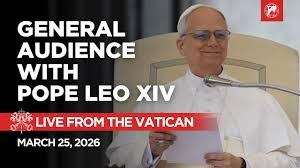

Catechesis. The Documents of Vatican Council II. II. Dogmatic Constitution Lumen gentium. 5. On the foundation of the Apostles. The Church in her hierarchical dimension”
การเรียนคำสอนต่อเนื่อง : มองสภาสังคายนาวาติกันที่สองผ่านเอกสารของสภาสังคายนา II. สังฆธรรมนูญข้อเชื่อ Lumen Gentium ว่าด้วยพระศาสนจักร (5) บนรากฐานของบรรดาอัครสาวก: พระศาสนจักรในมิติแห่งความมีลำดับชั้น
Dear brothers and sisters, good morning and welcome!
เจริญพรมายังพี่น้องชายหญิงที่รัก อรุณสวัสดิ์และยินดีต้อนรับ
We will continue our catecheses on the Documents of the Second Vatican Council, commenting on the Dogmatic Constitution Lumen gentium on the Church (LG). After presenting her as the People of God, today we will consider her hierarchical form.
ในการเรียนคำสอนต่อเนื่องเกี่ยวกับเอกสารของสภาสังคายนาวาติกันที่สอง พวกเราก็ยังคงพิจารณาสังฆธรรมนูญข้อเชื่อ Lumen gentium ว่าด้วยพระศาสนจักร โดยหลังจากที่ได้พิจารณาแล้วว่าเอกสารนี้กล่าวถึงพระศาสนจักรว่าเป็นประชากรของพระเจ้า วันนี้ พวกเราก็จะพิจารณาเกี่ยวกับรูปแบบความมีลำดับชั้นในพระศาสนจักร
The Catholic Church is founded on the Apostles, whom Christ appointed as the living pillars of His mystical Body, and possesses a hierarchical structure that works in the service of the unity, mission and sanctification of all her members. This sacred Order is permanently founded on the Apostles (cf. Eph 2:20; Rev 21:14), as authoritative witnesses to the resurrection of Jesus (cf. Acts 1:22; 1 Cor 15:7) and sent by the Lord Himself on mission into the world (cf. Mk 16:15; Mt 28:19). Since the Apostles are called to faithfully preserve the Master’s salvific teaching (cf. 2 Tim 1:13–14), they hand on their ministry to men who, until Christ’s return, continue to sanctify, guide and instruct the Church “through their successors in pastoral office” (Catechism of the Catholic Church, no. 857).
พระศาสนจักรคาทอลิกได้สถาปนาขึ้นโดยมีรากฐาน คือ บรรดาอัครสาวก ผู้ซึ่งพระคริสตเจ้าได้ทรงแต่งตั้งให้เป็นเสาหลักมีชีวิตในพระกายทิพย์ของพระองค์ ทำให้พระศาสนจักรมีโครงสร้างเป็นลำดับชั้นที่ทำงานรับใช้เพื่อให้สมาชิกทุกคนของพระศาสนจักรมีเอกภาพ ดำเนินพันธกิจ และได้รับการบันดาลความศักดิ์สิทธิ์โดยทั่วกัน ระเบียบอันศักดิ์สิทธิ์ของพระศาสนจักรนี้ได้รับสถาปนาขึ้นอย่างถาวรโดยมีบรรดาอัครสาวกเป็นรากฐาน (เทียบ อฟ 2:20; วว 21:14) ในฐานะที่พวกท่านเป็นพยานที่เชื่อถือได้ถึงการกลับคืนพระชนม์ชีพของพระเยซูเจ้า (เทียบ กจ 1:22; 1คร 15:7) และเป็นผู้ที่พระเยซูเจ้าทรงส่งไปทำพันธกิจในโลก (เทียบ มก 16:15; มธ 28:19) ด้วยเหตุที่บรรดาอัครสาวกถูกเรียกให้เก็บรักษาคำสอนอันบันดาลความรอดไว้อย่างซื่อสัตย์มั่นคงตามที่[พระเยซูเจ้า ผู้ทรงเป็น]พระอาจารย์ ได้ทรงสอน (เทียบ 2ทธ 1:13–14) [ต่อมา]พวกท่านจึงส่งมอบงานรับใช้ของตนให้แก่ผู้อื่น นับเป็นการ “ทำหน้าที่อภิบาลผ่านทางผู้สืบตำแหน่งของพวกท่าน” เพื่อการบันดาลความศักดิ์สิทธิ์ นำทาง และสั่งสอนพระศาสนจักร ตลอดไปจนกว่าพระคริสตเจ้าจะเสด็จกลับมาอีกครั้งหนึ่ง (เทียบ คำสอนพระศาสนจักรคาทอลิก, ข้อ 857)
This apostolic succession, founded on the Gospel and in the Tradition, is explored further in Chapter III of Lumen gentium, entitled “On the hierarchical structure of the Church and in particular on the Episcopate”. The Council teaches that the hierarchical structure is not a human construct, functional to the internal organization of the Church as a social body (cf. LG, 8), but a divine institution whose purpose is to perpetuate the mission given by Christ to the Apostles until the end of time.
การสืบทอดตำแหน่งจากบรรดาอัครสาวก ซึ่งมีรากฐานในพระวรสารและในธรรมประเพณี ได้ถูกนำมาไตร่ตรองอย่างกว้างขวางลึกซึ้งยิ่งขึ้นในบทที่สามของสังฆธรรมนูญ Lumen gentium ภายใต้หัวข้อ “ว่าด้วยโครงสร้างลำดับชั้นของพระศาสนจักร โดยเฉพาะอย่างยิ่ง ว่าด้วยตำแหน่งบิชอป” สภาสังคายนาได้สอนไว้ว่า โครงสร้างลำดับชั้นนี้ไม่ใช่สิ่งที่มนุษย์สร้างขึ้นให้เป็นโครงสร้างภายในพระศาสนจักรเพื่อการดำเนินงานในฐานะองค์กรหนึ่งทางสังคม (เทียบ สังฆธรรมนูญ Lumen gentium, ข้อ 8) หากแต่เป็นสิ่งที่พระเจ้าได้ทรงสถาปนาขึ้นโดยมีวัตถุประสงค์ คือ เพื่อให้พันธกิจที่พระเยซูเจ้าทรงมอบหมายแก่บรรดาอัครสาวกได้รับการนำไปปฏิบัติอยู่เสมอไม่ขาดตอน จนถึงวันสิ้นพิภพ
The fact that this theme is addressed in Chapter III, after the first two chapters have considered the very essence of the Church (cf. Acta Synodalia III/1, 209–210), does not imply that the hierarchical constitution is a subsequent element with respect to the People of God: as the Decree Ad gentes notes, “the Apostles were the first budding-forth of the New Israel, and at the same time the beginning of the sacred hierarchy” (no. 5), inasmuch as they were the community of those redeemed by Christ’s Paschal Mystery, established as a means of salvation for the world.
การที่หัวข้อข้างต้นได้รับการกล่าวถึงในบทที่สาม หลังจากที่มีการไตร่ตรองถึงสาระสำคัญของพระศาสนจักรไปแล้วในสองบทแรก (เทียบ Acta Synodalia III/1, 209–210) ไม่ได้หมายความว่าโครงสร้างลำดับชั้นของพระศาสนจักรเป็นเพียงผลที่สืบเนื่องจากการที่พระศาสนจักรเป็นประชากรของพระเจ้า ทั้งนี้ กฤษฎีกา Ad gentes [ของสภาสังคายนาวาติกันที่สอง ว่าด้วยกิจกรรมแพร่ธรรมของพระศาสนจักร] ได้ชี้ไว้ว่า “บรรดาอัครสาวกเป็นหน่อแรกของ[ประชากร]อิสราเอลใหม่ที่แตกออก และในขณะเดียวกันก็เป็นจุดเริ่มต้นของลำดับชั้นศักดิ์สิทธิ์ด้วย” [จึงต้องถือว่า ความที่พระศาสนจักรมีโครงสร้างเป็นลำดับชั้น มีความสำคัญไม่น้อยไปกว่าการที่พระศาสนจักร]เป็นประชาคมที่ประกอบด้วยผู้คนที่ได้รับความรอดแล้วด้วยกิจการไถ่กู้ของพระคริสตเจ้าในธรรมล้ำลึกแห่งปัสกา ที่ถูกสถาปนาขึ้นเพื่อเป็นเครื่องมือแห่งความรอดสำหรับโลกนี้
To understand the Council’s intention, it is advisable to read carefully the title of Chapter III of Lumen gentium, which explains the fundamental structure of the Church, received from God the Father through the Son and brought to fulfilment by the outpouring of the Holy Spirit. The Council Fathers did not want to present the institutional elements of the Church, as the noun “constitution” might imply if understood in the modern sense. The Document concentrates instead on the “ministerial or hierarchical priesthood”, which differs “in essence and not only in degree” from the common priesthood of the faithful, recalling that the latter are “nonetheless interrelated: each of them in its own special way is a participation in the one priesthood of Christ” (LG, 10). The Council thus addresses the ministry conferred upon men endowed with sacra potestas, sacred power (cf. LG, 18) for service in the Church: it focuses in particular on the episcopate (LG, 18–27), then on the priesthood (LG, 28) and the diaconate (LG, 29) as degrees of the one sacrament of Holy Orders.
เพื่อที่จะเข้าใจเจตนาของสภาสังคายนา เป็นการดีที่เราจะตั้งใจอ่านหัวข้อของบทที่สามแห่งสังฆธรรมนูญ Lumen gentium ซึ่งบรรยายโครงสร้างพื้นฐานของพระศาสนจักร ซึ่ง[พระศาสนจักร]ได้รับจากพระเจ้าพระบิดา ผ่านทางพระบุตร และได้เข้าสู่ความบริบูรณ์อาศัยการหลั่งไหลลงมาของพระจิต ในการนี้ สภาสังคายนาไม่ได้ต้องการพูดถึงองค์ประกอบของความเป็นสถาบันของพระศาสนจักรเหมือนกับเวลาที่เราพูดถึง “รัฐธรรมนูญ” ในความหมายปัจจุบัน หากแต่เอกสารของสภาสังคายนาได้เน้นเรื่อง “สถานะความเป็นสมณะแห่งการรับใช้ หรือที่มีความเป็นลำดับชั้น” ซึ่งแตกต่างจากสถานะความเป็นสมณะที่บรรดาผู้เชื่อมีร่วมกัน โดยเป็นความแตกต่าง “ในสาระสำคัญ ไม่ใช่แค่ในความมากน้อย” [อย่างไรก็ตาม สภาสังคายนาได้ชี้ไว้ว่า สถานะความเป็นสมณะที่บรรดาผู้เชื่อมีร่วมกัน] “ยังคงเกี่ยวข้องกับ[สถานะความเป็นสมณะที่มีลำดับชั้น] และต่างก็เป็นการเข้าส่วนในสมณภาวะหนึ่งเดียวของพระคริสตเจ้า ในแบบเฉพาะของตนเอง” (สังฆธรรมนูญ Lumen gentium, ข้อ 10) และหลังจากนั้นก็ได้กล่าวถึงหน้าที่รับใช้ที่มีการมอบหมายแก่ผู้คนที่ได้รับอำนาจศักดิ์สิทธิ์ (ข้อ 18) เพื่อทำงานรับใช้ในพระศาสนจักร โดยเน้นเป็นพิเศษถึงสถานะของบิชอป (ข้อ 18-27) ก่อนจะพูดถึงสถานะของบาทหลวง (ข้อ 28) และของสังฆานุกร (ข้อ 29) ในฐานะที่เป็นลำดับชั้นต่าง ๆ ภายในศีลอนุกรม[หรือศีลบวช]ซึ่งเป็นศีลศักดิ์สิทธิ์หนึ่งเดียว
By the adjective “hierarchical”, therefore, the Council intends to indicate the sacred origin of the apostolic ministry in the action of Jesus, the Good Shepherd, as well as its internal relationships. The Bishops, first and foremost, and through them the priests and deacons, have received tasks (in Latin munera), which lead them to the service of “all those who belong to the People of God”, so that, “working toward a common goal freely and in an orderly way, [they] may arrive at salvation” (LG, 18).
การที่สภาสังคายนาใช้คำว่า “เป็นลำดับชั้น” มีเจตนาที่จะชี้ถึงบ่อเกิดศักดิ์สิทธิ์แห่งงานรับใช้ของบรรดาอัครสาวก ซึ่งย่อมมีอยู่ภายในกิจการของพระเยซูเจ้าผู้ทรงเป็นผู้เลี้ยงแกะที่ดี ตลอดจนภายในความสัมพันธ์ในหมู่บิชอปด้วยกันเอง เหนือสิ่งอื่นใด บรรดาบิชอปได้รับหน้าที่ต่าง ๆ (คำภาษาละตินใช้ว่า munera) ซึ่งนำพาให้พวกเขารับใช้ “ผู้คนทุกคนที่เป็นส่วนหนึ่งของประชากรของพระเจ้า” เพื่อที่[ทุกคนที่เป็นส่วนหนึ่งของประชากรของพระเจ้า]จะได้ “ทำงานมุ่งสู่เป้าหมายเดียวกันอย่างเสรีและด้วยความเป็นระเบียบเรียบร้อย เพื่อที่พวกเขาจะได้ไปถึงความรอด” [ส่วนบาทหลวงและสังฆานุกรนั้น พวกเขา]ก็ได้รับหน้าที่เดียวกันนี้โดยผ่านทางบิชอป (สังฆธรรมนูญ Lumen gentium, ข้อ 18)
Lumen gentium repeatedly and effectively recalls the collegial and communal nature of this apostolic mission, reaffirming that the “duty which the Lord committed to the shepherds of His people is a true service, which in sacred literature is significantly called ‘diakonia’ or ministry” (LG, 24). We can therefore understand why Saint Paul VI presented the hierarchy as a reality “born of the charity of Christ, to fulfil, spread and ensure the intact and fruitful transmission of the wealth of faith, examples, precepts and charisms bequeathed by Christ to His Church” (Address, 14 September 1964, in Acta Synodalia III/1, 147).
สังฆธรรมนูญ Lumen gentium ได้เน้นย้ำอย่างซ้ำ ๆ และชัดเจนว่า พันธกิจแพร่ธรรมมีธรรมชาติแห่งความเป็นหมู่คณะและความเป็นหน้าที่ร่วมกัน โดยยืนยันว่า “หน้าที่ที่องค์พระผู้เป็นเจ้าทรงมอบหมายแก่บรรดาผู้เลี้ยงแกะที่อภิบาลประชากรของพระองค์นั้น เป็นหน้าที่รับใช้อย่างแท้จริง ซึ่งในพระคัมภีร์ถูกเรียกว่า ‘ดีอาโกเนีย’ [ซึ่งเป็นภาษากรีกแปลว่า] ‘หน้าที่รับใช้'” (สังฆธรรมนูญ Lumen gentium, ข้อ 24) ด้วยเหตุนี้ พวกเราจึงเข้าใจได้ว่า เพราะเหตุใดสมเด็จพระสันตะปาปานักบุญเปาโลที่หกจึงตรัสไว้ว่า ลำดับชั้นในพระศาสนจักรคือความเป็นจริงที่ “เกิดจากความรักของพระคริสตเจ้า เพื่อที่การถ่ายทอดสมบัติมีค่าแห่งความเชื่อ แบบอย่าง กฎเกณฑ์ และพระพรพิเศษ ซึ่งล้วนเป็นสิ่งที่พระคริสตเจ้าประทานให้แก่พระศาสนจักร จะดำเนินไปอย่างบริบูรณ์ กว้างขวาง และแน่นอน และเพื่อให้สิ่งต่าง ๆ เหล่านี้ถูกถ่ายทอดอย่างไม่บกพร่อง และบันดาลผลอย่างอุดม” (พระดำรัสต่อสภาสังคายนาวาติกันที่สอง, 14 กันยายน 1964, ใน Acta Synodalia III/1, 147).
Dear sisters and dear brothers, let us pray to the Lord that He may send to His Church ministers who are ardent with evangelical charity, dedicated to the good of all the baptized, and courageous missionaries in every part of the world.
พี่น้องชายหญิงที่รัก ขอให้พวกเราอธิษฐานภาวนาต่อองค์พระผู้เป็นเจ้า เพื่อที่พระองค์จะโปรดบันดาลให้พระศาสนจักรได้มีผู้ทำงานรับใช้ที่มีใจร้อนรนด้วยความรักตามแนวพระวรสาร มีความอุทิศตนเพื่อประโยชน์ของผู้คนทั้งหลายที่ได้รับศีลล้างบาปแล้ว และมีความกล้าหาญในการแพร่ธรรมในทุกหนแห่งของโลก
พระดำรัสของสมเด็จพระสันตะปาปาหลังการสอนคำสอน
I extend a warm welcome to all the English-speaking pilgrims and visitors taking part in today’s Audience, especially those coming from England, Ireland, Tanzania, Israel, Saudi Arabia and the United States of America. […] As we continue our Lenten journey, let us ask the Lord to grant us the grace to imitate Our Blessed Mother in her total “yes” to the Lord, and so open our hearts to his will for our lives. Upon all of you and your families, I invoke the joy and peace of our Lord Jesus Christ. God bless you all!
พ่อขอส่งคำทักทายอย่างอบอุ่นแก่ผู้แสวงบุญและผู้มาเยือนที่พูดภาษาอังกฤษที่ได้มาหาพ่อในวันนี้ โดยเฉพาะอย่างยิ่ง ผู้ที่มาจากอังกฤษ ไอร์แลนด์ แทนซาเนีย อิสราเอล ซาอุดีอาระเบีย และสหรัฐอเมริกา […] ขณะที่พวกเรากำลังก้าวเดินบนเส้นทางแห่งมหาพรต ขอให้พวกเราวิงวอนขอพระหรรษทานจากพระเจ้า เพื่อที่เราจะสามารถเอาอย่างแม่พระในการตอบรับต่อองค์พระผู้เป็นเจ้าอย่างไม่มีเงื่อนไข ให้เรารู้จักเปิดใจน้อมรับพระประสงค์ของพระองค์สำหรับชีวิตของพวกเรา พ่อขอให้ลูกทุกคนและครอบครัวของพวกลูกจงได้รับความปีติยินดีและสันติสุขของพระเยซูคริสตเจ้า องค์พระผู้เป็นเจ้าของเราทั้งหลาย ขอให้พระเจ้าโปรดประทานพระพรแก่ลูกทุกคน
Il mio pensiero va infine ai giovani, ai malati e agli sposi novelli. La solennità dell’Annunciazione del Signore, che oggi celebriamo, sia per tutti un invito a seguire l’esempio di Maria Santissima per essere pronti a compiere sempre la volontà di Dio. A tutti la mia benedizione!
ท้ายสุด พ่อมีความระลึกถึงบรรดาเยาวชน บรรดาคนป่วย และบรรดาคนที่เพิ่งแต่งงาน วันนี้เป็นวันสมโภชแม่พระรับสาร ขอให้การสมโภชนี้เป็นการเชื้อเชิญให้ทุกคนเอาอย่างพระนางมารีย์ผู้ศักดิ์สิทธิ์ยิ่ง ด้วยความพร้อมเสมอที่จะปฏิบัติตามพระประสงค์ของพระเจ้า พ่อขออวยพรลูกทุกคน
ใจความสรุปการสอนคำสอนของสมเด็จพระสันตะปาปา
Dear brothers and sisters, in our ongoing catechesis on the Second Vatican Council, today we reflect on the teachings of the Dogmatic Constitution Lumen Gentium concerning the hierarchical structure of the Church. In this regard, it is helpful to bear in mind that the Church is not something we invented, but is a divine institution established by Jesus himself. Christ appointed the apostles, placing Peter at their head, and sent them out to continue his salvific mission until his return in glory. To perpetuate this same mission, ministers were invested with sacred power to be the successors of the Apostles as Bishops, in whose ministry priests and deacons likewise participate through the Sacrament of Holy Orders. Sharing in the ministry of Jesus, the Good Shepherd, they are consecrated to serve the faithful, build up the Church and ensure the fruitful transmission of the faith. Let us therefore ask the Lord to continue to bless his Church with shepherds after his own heart.
พี่น้องที่รักทั้งหลาย ในการเรียนคำสอนต่อเนื่องเกี่ยวกับ[สังฆธรรมนูญข้อเชื่อ Lumen Gentium ของ]สภาสังคายนาวาติกันที่สอง[ว่าด้วยพระศาสนจักร] วันนี้เราจะพิจารณาเนื้อหาส่วนที่กล่าวถึงโครงสร้างลำดับชั้นภายในพระศาสนจักร ในแง่นี้ เป็นการดีที่จะระลึกอยู่เสมอว่า พระศาสนจักรไม่ใช่สิ่งที่พวกเราประดิษฐ์ขึ้น หากแต่เป็นสิ่งที่พระเยซูเจ้าทรงสถาปนาไว้ด้วยพระองค์เอง พระเยซูเจ้าได้ทรงแต่งตั้งบรรดาอัครสาวก ทรงแต่งตั้งให้นักบุญเปโตรเป็นห้วหน้าของพวกเขา และทรงส่งพวกเขาไปเพื่อทำให้พันธกิจแห่งความรอดของพระองค์ได้ดำเนินไปอย่างต่อเนื่อง จนกว่าพระองค์จะเสด็จกลับมาอีกครั้งอย่างรุ่งโรจน์ และเพื่อให้พันธกิจนี้ได้รับการปฏิบัติตามอยู่เสมอไม่ขาดตอน ก็มีการมอบอำนาจศักดิ์สิทธิ์ให้ผู้ทำงานรับใช้[บางคน]ได้มีสถานะเป็นบิชอป คือ ผู้สืบทอดตำแหน่งจากบรรดาอัครสาวก ขณะที่ในทำนองเดียวกัน บรรดาบาทหลวงและสังฆานุกรต่างก็ได้เข้าส่วนในงานรับใช้ของบรรดาบิชอปโดยผ่านทางศีลบวช [ทั้งบิชอป บาทหลวง และสังฆานุกร]ล้วนได้รับการเจิมให้ศักดิ์สิทธิ์ เพื่อที่จะให้มีส่วนร่วมในงานรับใช้ของพระเยซูเจ้า ผู้ทรงเป็นผู้เลี้ยงแกะที่ดี ด้วยการรับใช้บรรดาสัตบุรุษ การก่อร่างสร้างพระศาสนจักร และการทำให้มั่นใจได้ว่า ความเชื่อจะถูกส่งต่อในทางที่ทำให้เกิดผลอันอุดม ดังนั้น ขอให้พวกเราวิงวอนขอให้องค์พระผู้เป็นเจ้าโปรดประทานบรรดาผู้เลี้ยงแกะที่สบพระทัยพระองค์ เพื่อให้พวกเขาเป็นพระพรแก่พระศาสนจักรอยู่เสมอด้วยเทอญ
(วิษณุ ธัญญอนันต์ และวรินทร เติมอริยบุตร แห่งจุฬาลงกรณ์มหาวิทยาลัย
เก็บการสอนคำสอน General audience ของพระสันตะปาปาเลโอมาแบ่งปันและเพื่อการไตร่ตรอง)